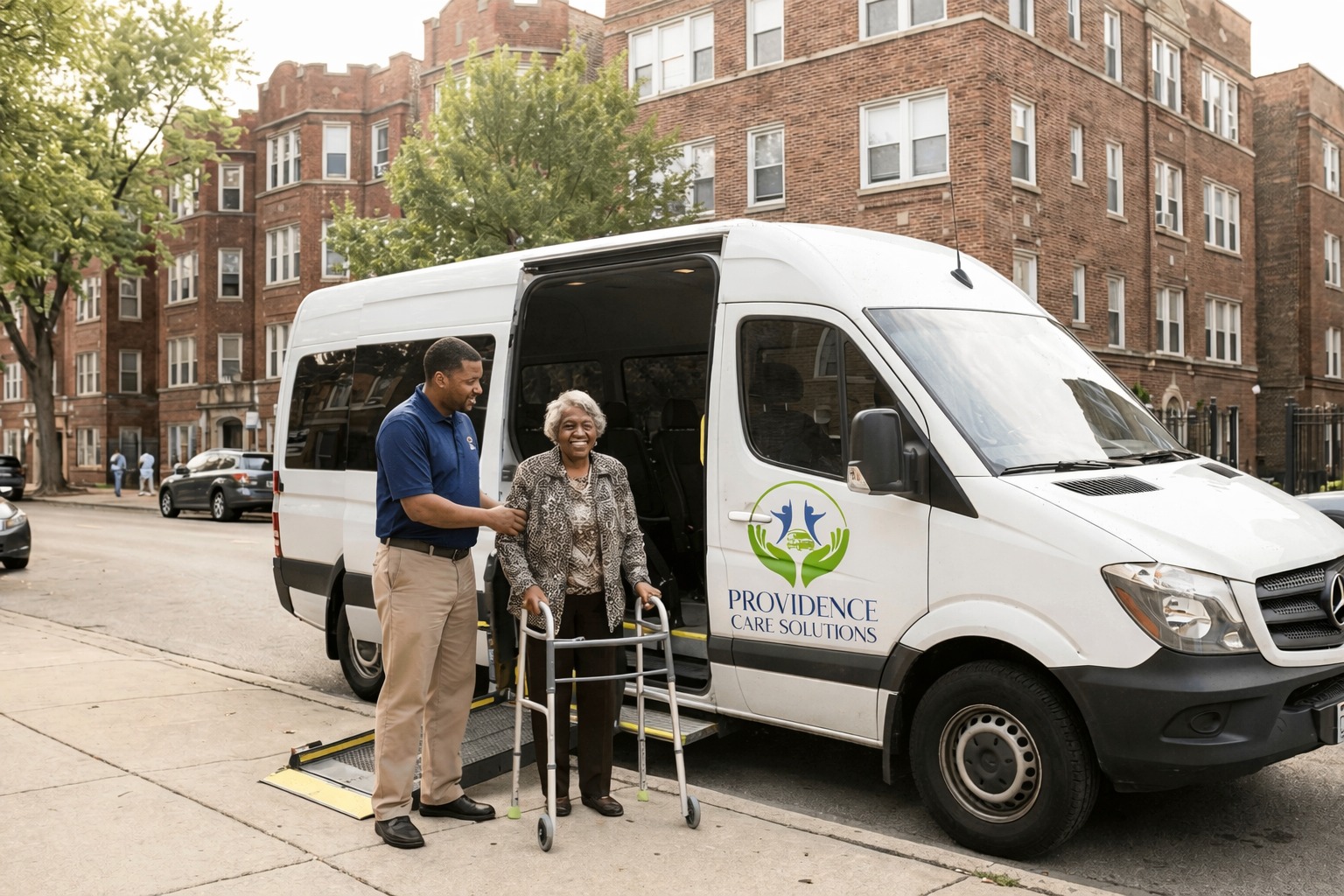
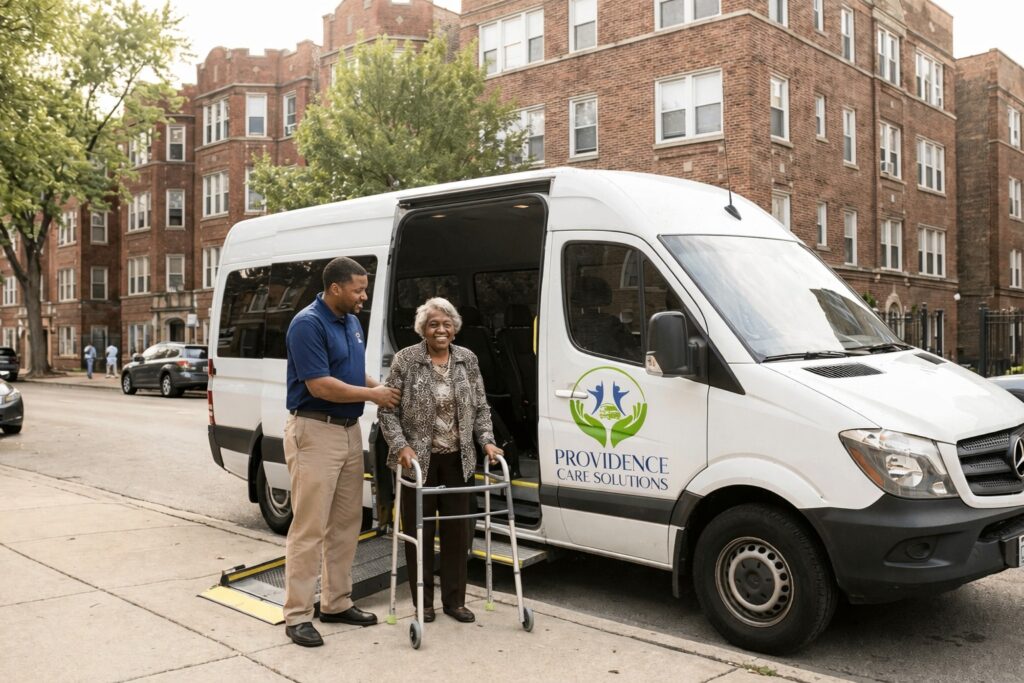
For many individuals, accessing healthcare is not limited by the availability of medical services, but by the ability to get there safely, comfortably, and on time. Mobility challenges, whether due to age, disability, injury, or chronic illness, can quietly become barriers that separate people from the care they need. At Providence Care Solutions (PCS), we believe this should never be the case.
Healthcare access is a fundamental right, not a privilege reserved for those who can move freely. Yet every day, elderly individuals miss appointments, recovering patients struggle to attend follow-ups, and families face unnecessary stress simply because transportation and coordinated support are unreliable or unavailable. These gaps don’t just delay care, they disrupt recovery, compromise health outcomes, and erode dignity.
PCS was created to close that gap.
Our Non-Emergency Medical Transportation (NEMT) services are designed with one core principle in mind: people deserve to arrive at care feeling safe, respected, and supported. From ambulatory clients to wheelchair users and individuals requiring extra assistance, our transportation solutions are structured to remove fear, uncertainty, and discomfort from the journey.
But mobility alone is not enough. Access to care also means continuity – knowing that transportation, in-home support, and medical coordination work together seamlessly. When services operate in silos, families are forced to manage logistics during already stressful moments. PCS integrates transportation with home health care, home care support, and medical courier services to reduce fragmentation and restore calm.
This integrated approach matters. It ensures appointments are kept, treatments continue uninterrupted, and patients can focus on healing rather than logistics. It also supports caregivers and families, who often carry the invisible weight of coordination and decision-making.
At its core, access to care is about dignity. It is about honoring people’s time, health, and humanity. When mobility becomes a barrier, dignity is often the first casualty. PCS exists to protect both. Because care should meet people where they are – physically, emotionally, and practically. And access to care should never depend on how far someone can walk, how well they can drive, or how complex their needs may be.